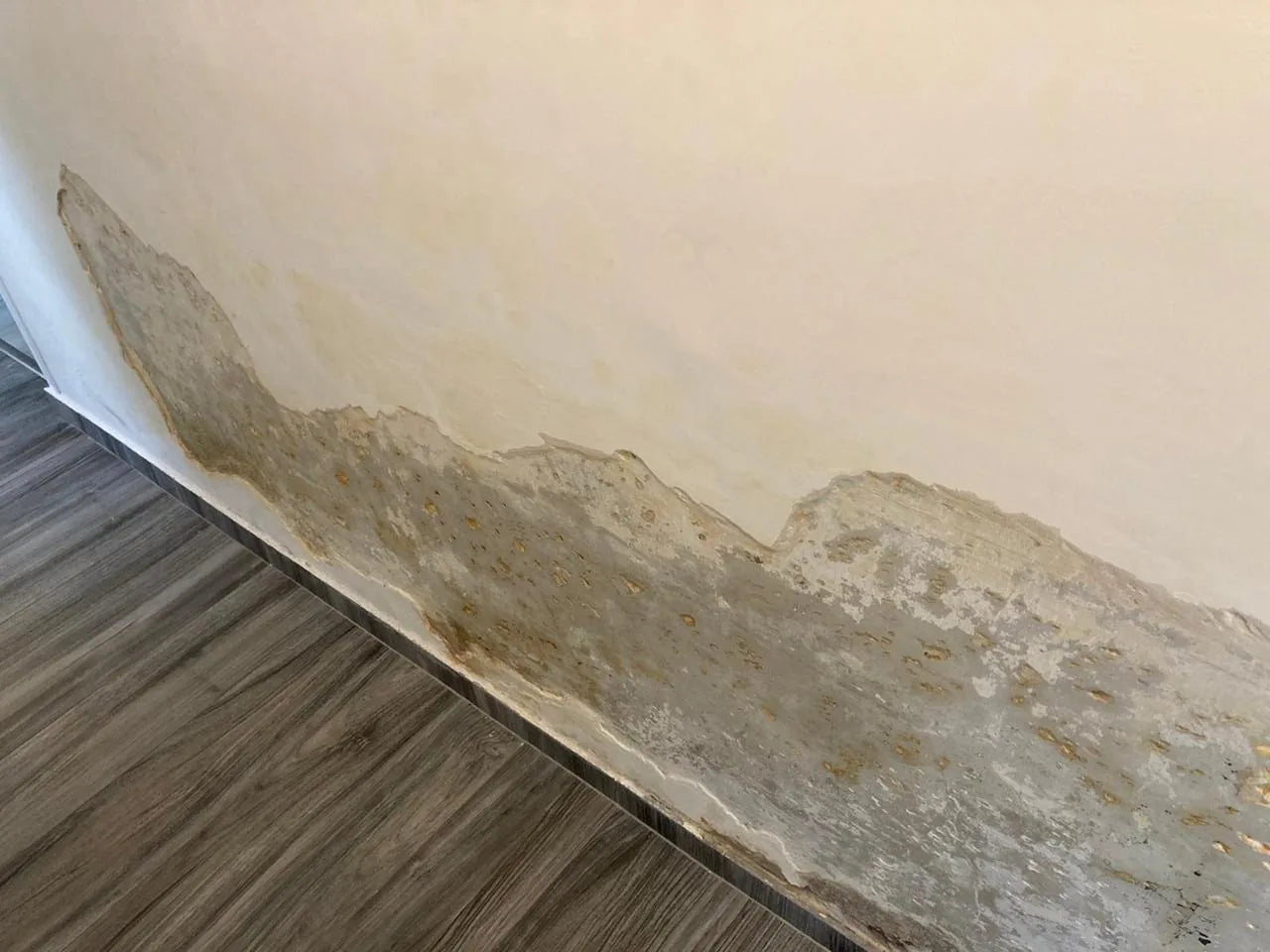
An RDbox Duo unit, the dark-cased model in the range, with its CE mark and indicator LEDs

RDbox Duo: the same wall-mounted format as the rest of the range, in the darker casing.

RDbox Duo

Rising damp and crawling insects, in one unit

A damp ground floor is where crawling insects settle. Warmth, moisture and dark voids at floor level are exactly what cockroaches and ants look for, and the wall drawing groundwater upward is usually the one they are living behind. Deal with only one of the two and the other brings it back.

RDbox Duo is the only model in the range that treats both at once. It is a PLUS-class rising damp unit with the same coverage and the same drying performance, plus a second function that sends variable-frequency wave trains through the structure to disturb crawling and ground-dwelling insects.

  • Two problems, one box, the damp side is PLUS-class, at PLUS coverage and PLUS speed; the insect side covers up to 500 m² of the same building.
  • No chemicals anywhere, no spray, no bait, no gel, nothing left on a surface and nothing to re-apply.
  • Built for where both occur, damp basements, ground floors, storerooms, kitchens and food premises.

What it is aimed at

Cockroaches, ants and termites

Cockroaches are a disaster for homes, hotels and restaurants. The insect function is aimed at them and at the other crawling, ground-dwelling insects that travel through the fabric of a building rather than fly into it, and in a damp ground floor those are rarely a passing problem: they are living in the same wet masonry the damp unit is there to dry.

A cockroach on a kitchen floor, photographed close to

Cockroaches

Cockroaches are a disaster for a home, and worse for a hotel or a restaurant, where one sighting in a dining room or a guest bathroom is a review, an inspection and a closed kitchen. They need warmth, moisture and a dark harbourage, which is why they colonise damp skirtings, service voids, drains and the underside of kitchen units. They breed continuously in those conditions, and one in the open usually means a population that is not. Duo works on the structure they are living in rather than the surfaces you can see.

A dense ant trail running along the corner where a skirting board meets a wooden floor

Ants

Ant trails follow damp mortar joints, expansion gaps and the junction between a floor slab and a wall. The nest is almost always inside the structure rather than in the room, which is why spraying a trail removes the trail and not the colony. Duo treats the whole area at once, nest included.

Timber eaten hollow by termites against a masonry wall, with live termites in the galleries

Termites

Subterranean termites travel through soil and masonry to reach timber, and a permanently damp ground-floor wall is the route in. Duo disturbs termites moving through the treated structure. It is not a timber treatment – anything already established inside woodwork has to be dealt with conventionally first.

A cockroach at the base of a skirting board, where a wall meets the floor

Why they arrive with the damp

Rising damp keeps the base of a wall permanently wet, and a wet wall is water, shelter and often food. Treat the insects without drying the wall and every condition that drew them is still there. Duo removes the conditions and the occupants on the same schedule.

500 m²

Insect coverage per unit

The insect function covers up to 500 m² per unit. The rising-damp side is sized separately, from the treated ground-floor or basement area, and runs from 100 m² to 2,500 m².

< 1 week

Published insect response

Published information states that crawling insects can disappear in less than a week, while rising damp in fired brick or concrete block recedes in under four months. Both figures depend on the building.

Insect scope, coverage and response times are the manufacturer's published figures for RDbox Duo.

How it works

One unit, two signals

Duo is a PLUS-class damp unit with a second, separate insect function in the same enclosure. Neither one is a chemical treatment.

  1. 01

    The damp side: an electro-physical signal

    A very-low-frequency electromagnetic signal is applied to the wall, reversing the capillary movement that draws groundwater up through the masonry. This is the same treatment as RDbox Plus, at the same coverage and the same published speed.

  2. 02

    The insect side: variable-frequency wave trains

    A second function emits wave trains that vary in frequency, carried through the structure itself. These are what disturb crawling and ground-dwelling insects. The manufacturer states that running the two functions together improves both wall drying and insect control.

  3. 03

    Sized twice

    The damp function is chosen from the treated ground-floor or basement area, in seven sizes from 100 m² to 2,500 m². The insect function covers up to 500 m² per unit whichever damp size is chosen.

  4. 04

    Mounted once, then left alone

    Two screws into a solid wall and a standard socket. Nothing to refill, service or replace, and no chemical introduced into the building at any point, which is what makes it usable in a kitchen, a food store or a home with children and pets.

What it does not do

Worth reading before you order: two of these are the difference between Duo working and Duo disappointing you.

  • It is not an insecticide. Nothing is killed on contact. The signal makes the treated structure inhospitable so that crawling insects leave it, and the published response is under a week rather than immediate.
  • Insects already living inside timber are out of scope. Established wood-borers, and termites already inside woodwork, need conventional eradication first. Duo is not a substitute for that treatment.
  • It is for crawling and ground-dwelling insects. Flying insects are not part of the stated scope.
  • It does not seal the building. Entry points, drains and other access routes still have to be controlled, exactly as they would with any other method.
  • It works only while powered. Unplugged, both the drying and the insect function stop.

Drying times depend on wall material, thickness, construction, initial moisture level and site conditions. The unit must remain continuously powered for treatment to continue.

Models and prices

Seven sizes, chosen by treated area

Every size carries the same insect function. Only the rising-damp coverage changes.

How the size is chosen

Choose from the ground-floor or basement area you are treating, not the total floor area of the building. Where the treated area falls between two sizes the larger one is the safe choice, and an advisor will confirm it from your own figures before you order. The insect function covers up to 500 m² on every size.

100 m²

RDbox Duo 100

Treats up to 100 m² of ground floor or basement, plus up to 500 m² of insect control.

Dhs. 9,200.00

150 m²

RDbox Duo 150

Treats up to 150 m² of ground floor or basement, plus up to 500 m² of insect control.

Dhs. 10,140.00

200 m²

RDbox Duo 200

Treats up to 200 m² of ground floor or basement, plus up to 500 m² of insect control.

Dhs. 11,070.00

300 m²

RDbox Duo 300

Treats up to 300 m² of ground floor or basement, plus up to 500 m² of insect control.

Dhs. 12,000.00

500 m²

RDbox Duo 500

Treats up to 500 m² of ground floor or basement, plus up to 500 m² of insect control.

Dhs. 12,940.00

1,250 m²

RDbox Duo 1,250

Treats up to 1,250 m² of ground floor or basement, plus up to 500 m² of insect control.

Dhs. 17,800.00

2,500 m²

RDbox Duo 2,500

Treats up to 2,500 m² of ground floor or basement, plus up to 500 m² of insect control.

Dhs. 22,840.00

Prices are charged in AED and include VAT. A price shown in another currency is an indicative conversion at the current rate. Insect control covers up to 500 m² on every size, and RDbox Insect Protect extends that area where a larger one has to be covered. Power adaptors and plugs carry 2 years.

Technical information

RDbox Duo specification

Published values from the manufacturer's technical sheet.

Show areas in

Coverage & performance

Rising-damp coverage100 / 150 / 200 / 300 / 500 / 1,250 / 2,500 m²
Insect-control coverageUp to 500 m²
Typical drying, fired brick or concrete blockUnder 4 months
Insect responseCrawling insects typically disperse within a week
Insects coveredCockroaches, ants and other crawling or ground-dwelling insects, including their larvae, and termites moving through the treated structure

Installation

Building workTwo wall screws. The unit hangs on a suitable solid wall inside the treated area, like a small cabinet.
Not requiredNo chemical injection, no damp-proof course, no chases cut, no tanking and no replastering.
PowerA standard socket, then left permanently on, treatment continues only while the unit is powered.
Fitting timeMinutes
MaintenanceNone. Nothing to refill, service or replace.

Electrical

Input voltage range100–240 VAC
Power supply12 VDC external
Power consumptionLess than 1.5 W
Maximum magnetic flux densityBrms max. 0.5 µT

Physical

Dimensions29.5 × 22 × 4.5 cm
Weight, 100–500 m² modelsapprox. 2.1 kg
Weight, 1,250 / 2,500 m² modelsapprox. 2.4 kg

Indicators & compliance

Red LEDPower connected
Green LEDOperating correctly
CertificationCE · FCC
OriginMade in EU

Warranty

Repair warranty, unit30 years
Power adaptor / plug2 years
Drying guaranteeIncluded, subject to the drying-guarantee conditions

Drying times depend on wall material, thickness, construction, initial moisture level and site conditions.

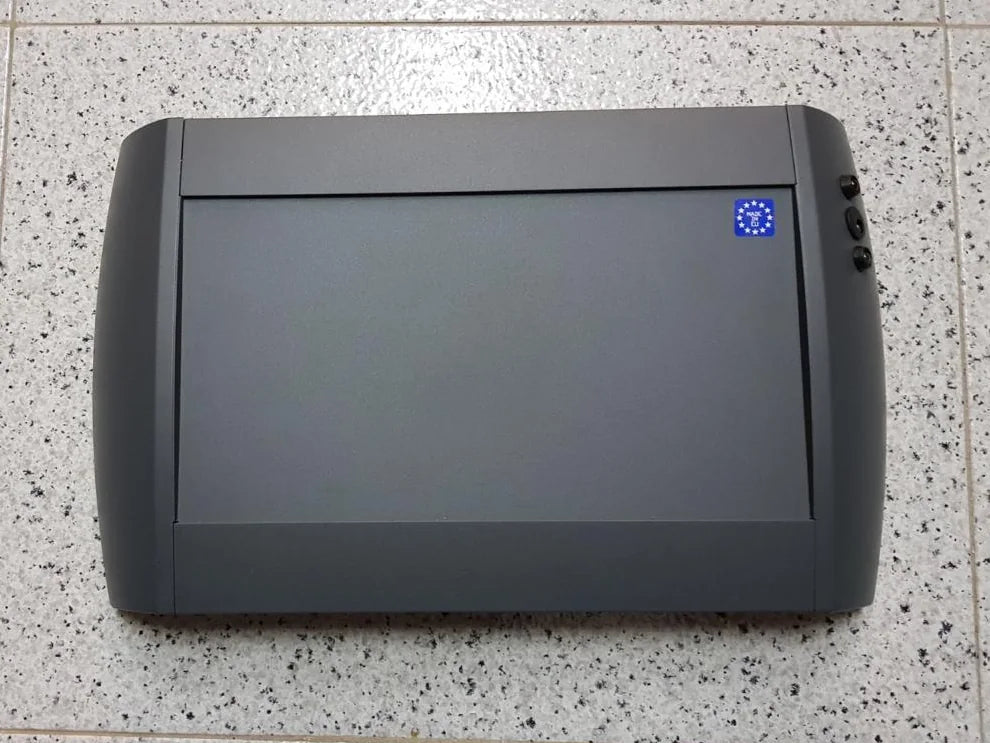
A wall with a horizontal tide mark and plaster blown away above the skirting

Rising damp: the damage stops at a line, because that is where the water does.

What it treats

Rising damp in walls and floors

Rising damp is groundwater drawn upward through porous masonry by capillary action. It shows as a tide mark at skirting level, plaster that blows or crumbles, salt deposits on the wall face, and an odour that ventilation does not clear.

RDbox Duo treats it at PLUS-class output, with the same coverage and the same published drying performance as RDbox Plus.

  • Tide marks and blown plaster, damage concentrated at the base of the wall, rising to a roughly horizontal line where the water stops.
  • Salt deposits, white crystalline efflorescence carried out of the masonry and left on the surface as the water evaporates.
  • A persistent damp odour, and cold, heavy walls that never dry out, whatever the season or the ventilation.
Coverage
100–2,500 m²
Typical result
Under 4 months
A trail of ants running along the base of a skirting board

Crawling insects travel through the building, not across it.

What it treats

Crawling and ground-dwelling insects

Cockroaches, ants and termites travel through the fabric of a building rather than fly into it, and a permanently damp ground floor is where they settle. The insect function emits variable-frequency wave trains through the treated structure, which disturbs them and causes them to leave it.

Published information puts dispersal at less than one week, across up to 500 m² per unit. Nothing is killed on contact, and no chemical is introduced into the building.

Where more than that has to be covered, RDbox Insect Protect extends the insect coverage of an installed Duo. It is an extension, not a unit that works on its own.

  • Cockroaches, harbouring in damp skirtings, service voids, drains and the underside of kitchen units, where they breed continuously.
  • Ants, nesting inside the structure, with trails following mortar joints and the junction between a floor slab and a wall.
  • Termites, moving through soil and masonry toward timber. Insects already established inside woodwork require conventional treatment beforehand.
Insect coverage
Up to 500 m²
Typical response
Under one week
An RDbox Duo, the dark-cased unit that treats rising damp and crawling insects

The RDbox Duo unit. It is fixed through two screws to a solid wall inside the treated area, and connected to a standard socket.

Installation

Where the unit goes

Duo is fitted exactly like the rest of the rising-damp range: two screws into a solid wall inside the treated area, then a standard socket. No chemical injection, no damp-proof course, no chases cut, no tanking and no replastering.

Position is the part that matters. The manufacturer's guide is specific that the back of the unit has to be in firm contact with masonry, with nothing sandwiched behind it – that contact is what puts the signal into the structure.

  • A thick load-bearing or peripheral wallpreferably one facing the exterior or adjoining a neighbouring property, and affected by rising damp or as close as possible to the worst area.
  • Nothing behind the unitthe back must sit in direct, firm contact with the masonry, with no plasterboard, timber, ceramic tile or marble in between and no gap left behind it.
  • About 30 cm above floor leveland preferably within a metre of a socket, so it can stay permanently powered without a lead trailing across the room.
  • Two fixing points, 10 cm apart and leveldrilled with a 5 mm bit, with about 3 mm of clearance left so the unit hangs like a picture frame.
  • Then leave it connecteddrying is progressive. Do not seal or redecorate a damp wall before the masonry has dried.
Building work
Two screws
Height
approx. 30 cm
Drill bit
5 mm
Fixing centres
10 cm apart

Talk to someone

Damp, insects, or both?

Tell us the area you need treated and what you are seeing – tide marks, cockroaches, ant trails, mud tubes – and we will confirm whether Duo is the right model and which size it needs to be.

We reply to WhatsApp messages within one business day.

Send us your details

No obligation, and no site visit charge.

We use your details only to respond to this enquiry.